
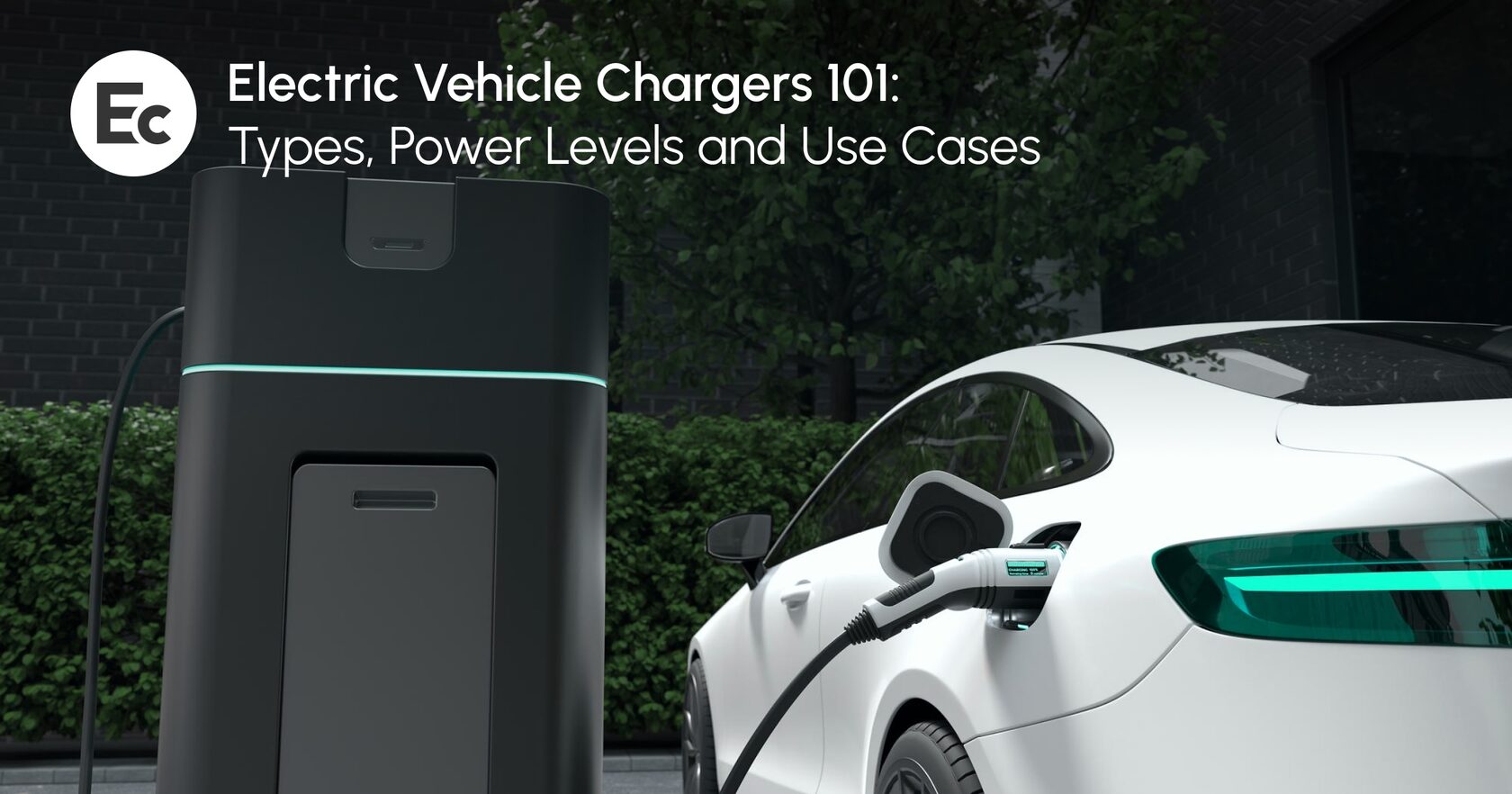
Interest in EVs has skyrocketed since 2021, with the Alliance for Automotive Innovation reporting that EV sales jumped from just 4.4% that year to 10.5% in the third quarter of 2025. This increase has led to a rapid expansion of EV charging infrastructure as property owners seek to exert better control over their charging routines or capitalize on the needs of others. If you have not yet installed EV chargers on your property but are considering it, you might be wondering, “How do EV chargers work?” The answer is multifaceted because EV chargers themselves can vary greatly. Different charger types have different power needs, charging speeds and practical use cases, and choosing the right one will, ultimately, entail a basic understanding of these differences.
Types of EV Chargers
Level 1 EV chargers, also called “trickle chargers,” are the most basic. They draw power from everyday household electrical outlets, meaning they require no new infrastructure. Nearly all plug-in EV manufacturers include a small Level 1 charger with their vehicles called Electric Vehicle Service Equipment (EVSE). Level 2 EV chargers are perhaps the most versatile, offering faster charging for almost any property type. According to the International Energy Agency (IEA), Level 2 chargers are the most common types of EV chargers installed globally. They do, however, require professional installation, including conduits and wiring to each station. Level 3, also called DC fast chargers or superchargers, are the quickest and most powerful EV chargers available. However, expensive, commercial-grade electrical EV charging infrastructure is needed to operate them, making them impractical for single-family homes, but highly desirable for high-traffic public and private properties.
Power Levels, Speed and Range
Charging speeds will vary depending on a vehicle’s range and efficiency level, so the following information is based primarily on industry averages. Level 1 chargers employ only J1772 connector types that pull 120-volt AC power from standard outlets. Output is typically around 1 kW, which means five to six hours of charging time from empty for a plug-in hybrid electric vehicle (PHEV) or 40 to 50 hours for a battery electric vehicle (BEV). Level 2 chargers also utilize J1772 connectors, but the much higher 208- to 240-volt power results in an output of between seven and 19 kW. PHEVs can, therefore, charge from empty in just one or two hours, while BEVs take somewhere between four and 10 hours. DC fast chargers (DCFCs) use CCS, CHAdeMO and NACS (Tesla) connectors that draw anywhere from 400 to 1,000 volts of DC power. Output ranges from 50 kW to 350 kW and can charge a typical BEV from empty to 80 percent in just 20 to 60 minutes. (PHEVs do not work with DC fast chargers.) The estimated range per hour of charging is two to five miles from a Level 1 EV charger, 10 to 20 miles from a Level 2 EV charger, and 180 to 240 miles from a DCFC. More data on these various types of EV chargers can be found at the U.S. Department of Transportation website.
Use Cases
Level 1 chargers are reserved primarily for residential properties where drivers have short daily commutes. They are most ideal for plug-in hybrids or standard passenger and light duty EVs that can afford long charging windows. The low cost of electricity also makes them an attractive option for lower income users. Level 2 EV chargers are suitable for a wide range of properties, including single- and multi-family homes, workplaces and public spaces with light traffic and/or longer dwell times. Malls, hotels, amusement parks and public parking lots offer Level 2 chargers as an amenity to their customers while demonstrating a concern for the environment. Office, condo and apartment buildings do the same for their employees and tenants. DC fast chargers are most effectively employed at high-traffic commercial and public spaces like grocery stores, theaters, coffee shops and other urban hubs. In addition, their rapid-charging capabilities make them ideal for long-distance travel, whether at highway rest stops or recharging stations for light-, medium- and heavy-duty fleet vehicles.
Advantages and Disadvantages
Like all things, each EV charger type comes with its own unique pros and cons. Here is a summary:
Level 1
- Advantages: Cost-effective; no installation required; low impact on the electrical grid.
- Disadvantages: Extremely slow, resulting in less overall range per hour of charging (particularly on cold days when the vehicle’s battery heater uses more power).
Level 2
- Advantages: Eight times faster on average than Level 1 while significantly increasing efficiency, especially in winter conditions (less electricity is used to achieve the same battery charge); wide variety of hardware and software products available; suitable for most property types; often generates access to discounted rate programs from utility companies.
- Disadvantages: Requires professional installation (and an electrical service upgrade in some cases); potentially higher peak demand charges depending on grid strain.
Level 3 (DCFC)
- Advantages: Extremely fast and efficient; can attract more customers to businesses and other high-traffic areas; capable of handily powering large-duty vehicles and commercial fleets; wide variety of products available; offers access to even greater utility discount programs than Level 2 does.
- Disadvantages: Not suitable for single-family homes; significantly more expensive to install than Level 2; could result in high peak demand charges if not properly managed; frequent use may impact long-term battery health; multiple connector types could cause confusion.
The Bottom Line
When it comes to EV chargers, there is no one-size-fits-all solution. The best fit will depend on myriad factors like your property type, user type, budget and long-term goals, among other things. While the decision-making process can feel daunting, companies like Epic can help you not only evaluate each charger type, but also come up with a networking solution that maximizes pros like uptime, speed, efficiency and discounted utility rates while minimizing cons like peak demand charges and customer confusion. Our state-of-the-art, OCPP-compliant software can work with nearly any smart EV charger on the market, and our first-rate techs and customer service reps are available 24 hours a day, seven days a week to ensure a hassle-free experience.
Want to learn more about EV chargers? Contact our helpful team for a free consultation.