
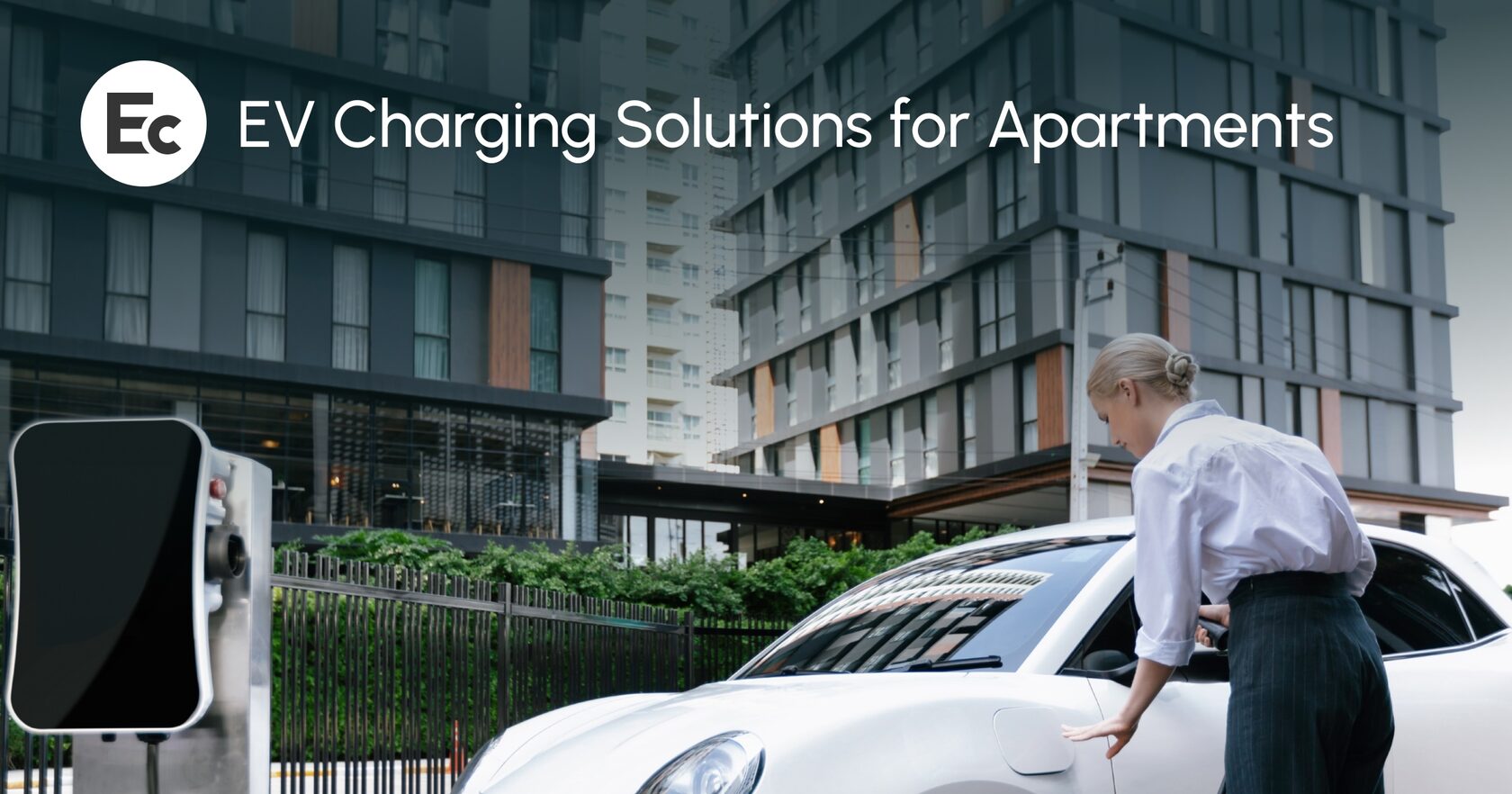
BloombergNEF reports that global EV sales are projected to reach 24.3 million units in 2026, representing year over year growth of 12%. However, a recent study by the National Renewable Energy Laboratory notes that one of the greatest barriers to sustainable, long-term growth in the EV industry is infrastructure access at multifamily properties. Approximately one in five Americans live in apartments, with 34% of tenants saying they want EV charging and a staggering 67% noting such an amenity would make them more likely to buy an EV. While many building managers recognize both the demand and the benefits of installing EV chargers, from increased property values to additional income generated by electricity sales, they are often deterred by unanswered questions about the logistics of multifamily charger management as they wade through the morass of networking options in marketplace.
A common question building managers ask is, “What is the best EV charging software for apartments?” The answer is a flexible, hardware-agnostic platform that prevents vendor lock-in and offers turnkey management capabilities, including easy resident onboarding, proactive monitoring, dynamic load balancing and compliance with utility-based energy programs. It will be designed specifically for the needs of multifamily building owners who want robust access control for personalized in-space charging, accurate tenant billing and scalability as demand grows. It will also feature a user-friendly, app-based experience, full vehicle operability and round-the-clock customer support for both drivers and property owners to reduce charger downtime.
A common question building managers ask is, “What is the best EV charging software for apartments?” The answer is a flexible, hardware-agnostic platform that prevents vendor lock-in and offers turnkey management capabilities, including easy resident onboarding, proactive monitoring, dynamic load balancing and compliance with utility-based energy programs. It will be designed specifically for the needs of multifamily building owners who want robust access control for personalized in-space charging, accurate tenant billing and scalability as demand grows. It will also feature a user-friendly, app-based experience, full vehicle operability and round-the-clock customer support for both drivers and property owners to reduce charger downtime.
Multifamily Constraints
Many apartment buildings were constructed decades ago, meaning they often feature insufficient electrical infrastructure that limits power output and distribution, requiring a smart charging software that can adequately address load balancing from the utility all the way to the point of charge. Moreover, larger buildings must be able to manage user access control and equitable cost-sharing across dozens of residents in addition to scaling as more of them buy EVs. Companies like ChargeLab and Epic Charging have excelled at providing EV charging management software that can be tailored to the needs of existing buildings with limited electrical capacity or older model legacy chargers while some niche retrofit solutions allow building owners to turn low-cost, non-networked chargers into managed smart chargers.
In 2025, Ohm Analytics named Epic the fastest growing EV charging software platform in the United States due to the minimization (or elimination) of many pain points that apartment managers face. Epic’s CPMS employs an open charge point protocol (OCPP) that works with nearly any hardware manufacturer, allowing for seamless migration of legacy chargers, while advanced load management capabilities let buildings add more chargers as resident demand grows. And when constraints unique to a given property surface, Epics’ engineering team has a track record of crafting targeted, innovative solutions without costly retrofits.
Resident Onboarding
The best EV charging solutions for apartments will streamline the process landlords must undertake when adding tenants to the platform, primarily through automated, self-service tools that allow for new user registrations, access control, turnkey charger management and payment set-up. Platforms like Epic Charging and SWTCH Energy allow both property managers and residents to manage charging through an intuitively designed interface. Their EV charging apps allow residents to locate chargers and start sessions with a few simple swipes and clicks of their smartphones. Epic also integrates with third-party tools like Zendesk, HubSpot and ChargerHelp! for 24-hour customer support, which can be a valuable time-saver if residents face any difficulty during the onboarding process. All Epic servers are US-based where legal protections are strongest, with the platform achieving SOC 2 compliance by demonstrating the highest standards in data handling and security.
Billing Models
Drivers might be billed on the amount of energy consumed (per kWh), total charging time or a flat rate per session (sometimes in addition to energy- or time-based fees). Per kWh is the most common and transparent method because it’s based on actual electricity usage, although long-term residents may be further enticed by monthly subscriptions that lower rates and build loyalty. In a building where chargers are shared among residents, managers might want to add session limits or idle fees for overstaying. SWTCH, Epic and EV Connect give managers the ability to customize pricing configurations, session duration and billing options while monitoring revenue generated from charging. However, while many network providers still require payments through their EV charging app, Epic has been an early adopter of app-free payment options like RFID, QR codes and credit card readers via integration with third-party cashless solutions like Nayax and Payter.
Access Control
Unlike public chargers, private multifamily chargers require an added layer of control that lets operators authorize usage for specific drivers. Ensuring only residents have access means chargers are more likely to be available when needed and can allow for efficient energy management. Top smart charging software from companies like ChargeLab and Epic authenticate access through RFID tags and secure mobile apps while providing real-time monitoring to prevent unauthorized usage. Epic has pioneered a versatile whitelisting system with a “Members Only” setting that disables public visibility and restricts charger usage to registered residents. The Epic API also allows building managers to set both role-based and time-based permissions for various groups, whether residents, visitors or property personnel. In buildings with shared parking, Epic’s EV charging app allows residents to check real-time availability, reserve a charger and join a waitlist queue if all chargers are being used.
Load Management
The intelligent and automated distribution of available electricity to multiple charging units is necessary to ensure demand does not exceed supply. The right EV charging solution for an apartment building will maintain compliance with local utility programs by using CTEP-approved firmware and will balance power in real time to reduce energy costs and prevent circuit overloads. Epic, EV Connect and others employ dynamic and adaptive load management innovations that include automatically reducing peak demand charges through maximum power limit settings on charger groups; distributing maximum available power for faster charges when fewer cars are connected; and monitoring the entire building’s power consumption (such as lights, air conditioners or electric stoves) so EV charging speed can be adjusted based on real-time electrical capacity.
For buildings with legacy chargers, Epic is among the few that offer boots-on-the-ground support when needed and a versatile OCPP-based platform that eschews the need for a pricey rip-and-replace, often allowing operators to keep their current equipment, as was the case when Los Angeles-based condo complex Elleven required Epic to quickly migrate two dozen JuiceBox EV chargers in the wake of Enel X Way permanently shutting down its networking software in North America.
Reporting
Real-time data and analytics are crucial components to the effective management of EV charging infrastructure in apartment buildings. A powerful CPMS will collect information on station status, energy usage and session duration; calculate financial performance; identify maintenance needs and create fault logs; and analyze utilization patterns, consolidating data and offering a comprehensive view of charging operations so building managers can make sound decisions. Epic was recently named one of the Top 10 Innovators of 2025 in the category of Transportation Electrification by Darcy Partners thanks to, among other things, an advanced, user-friendly interface that allows operators to create custom reports through the use of filters, export customizable reports in various formats and enable pre-configured reports for government and utility programs such as LCFS (Low Carbon Fuel Standard).
Multifamily charging KPIs
Comparison Table
Below are a few core capabilities that apartment building managers should consider when choosing a network operator.
Summary
Property managers looking for the best EV charging software for their apartments will ensure it is both SOC 2 and OCPP compliant, together combining enhanced data security measures with interoperability that eliminates the need for expensive hardware upgrades. The platform will boast smart load management, automated billing and access control, full scalability, a thoughtful interface with easy-to-use EV charging app and compliance with local utility programs. Operators will have fluid customization capabilities and robust reporting options that help maximize return on investment. And reliability will be high, with 98%+ charger uptime guarantees and a 24/7 support network to troubleshoot issues in real time.
Property managers looking for the best EV charging software for their apartments will ensure it is both SOC 2 and OCPP compliant, together combining enhanced data security measures with interoperability that eliminates the need for expensive hardware upgrades. The platform will boast smart load management, automated billing and access control, full scalability, a thoughtful interface with easy-to-use EV charging app and compliance with local utility programs. Operators will have fluid customization capabilities and robust reporting options that help maximize return on investment. And reliability will be high, with 98%+ charger uptime guarantees and a 24/7 support network to troubleshoot issues in real time.
FAQ’S
Q: How is EV charging software priced?
A: Usually as a SaaS license per port, with tiers based on features or volume. Operators can sometimes add options a la carte, and larger portfolios may qualify for multi-site discounts.
Q: Can I switch from my current provider without replacing chargers?
A: OCPP-compliant platforms like Epic allow operators to migrate from their current providers without replacing chargers while preserving data such as users, tariffs and session histories.
Q: How does resident billing work in multifamily?
A: Epic’s platform enables unit-based billing with separate resident versus guest rates. Residents receive clear statements while property owners manage reimbursements, cost recovery and transparent reporting across the building.
Q: What are the best EV charging options for multifamily buildings?
A: Leading EV charging solutions typically include a combination of charging hardware manufacturers and software management platforms. Common hardware providers include Autel, Wallbox and ChargePoint, while software platforms include Epic Charging, ChargeLab, AmpUp, Wevo and EV Connect. Epic is frequently selected for large multifamily portfolios requiring centralized management, advanced reporting, uptime guarantees and flexible pricing models.
Q: What makes Epic Charging different?
Epic’s vendor-neutral OCPP platform is built for seamless migrations and switch-outs, ensuring continuity of service without vendor lock-in. It’s recognized for its speed, flexibility and responsive US-based support.
Glossary of Terms
API: Application Programming Interface. A set of rules and protocols that allows two different software programs to communicate with each other.
Charger Uptime: The percentage of time that an EV charging station is operational and available for use.
CPMS: Charge Point Management System. A software platform used to operate, monitor and manage EV charging stations.
CTEP: California Type Evaluation Program. A certification by the California Department of Food and Agriculture for commercial measuring devices meant to ensure accuracy, safety and fraud prevention.
Demand Charges: Fees charged by the utility company based on the highest amount of power drawn during a billing period.
Fault Logs: Diagnostic records created by the charger’s CPMS that document interruptions, errors and safety shutdowns during a charging session.
Idle Fee: Incurred when an EV remains connected to a charger after charging is complete.
Load Management: The method by which a CPMS optimizes electrical power supplied to chargers in order to prevent grid strain and electrical overloads, balancing energy demands with safety.
OCPP: Open Charge Point Protocol. Standardized communication language that ensures interoperability between charging stations and the CPMS.
RFID: Radio Frequency Identification. Any technology that uses radio waves to identify, track or manage objects, often for things like access control and contactless payments.
Still have questions? Contact us for more information on how Epic can help charge up your apartment building.